
If you’re choosing between NordVPN vs PureVPN, you’re really choosing between two different priorities: consistent, audited performance, or the lowest possible price. Both are established VPN providers with large server networks, but independent testing across multiple review outlets in 2026 points in a fairly consistent direction — so let’s break down exactly where each one wins.
🏁 Quick Verdict
Choose NordVPN if: you want consistently fast speeds, stronger streaming reliability, and a privacy policy that’s been independently audited.
Choose PureVPN if: lowest possible price is your top priority and you’re mainly using the VPN for casual browsing or domestic streaming.
NordVPN vs PureVPN: Quick Comparison
| NordVPN | PureVPN | |
|---|---|---|
| Servers | 6,000+ in 111+ countries | 6,000+ in 65–66 countries |
| Starting price | ~$3.09/mo (2-year plan) | ~$2.15/mo (2-year plan) |
| No-logs policy | Independently audited (PwC) | Self-reported, less established track record |
| Protocol | NordLynx (proprietary, WireGuard-based) | OpenVPN, IKEv2, WireGuard |
| Devices per plan | 10 | 10 |
| Money-back guarantee | 30 days | 31 days |
⚡ Speed: NordVPN Pulls Ahead
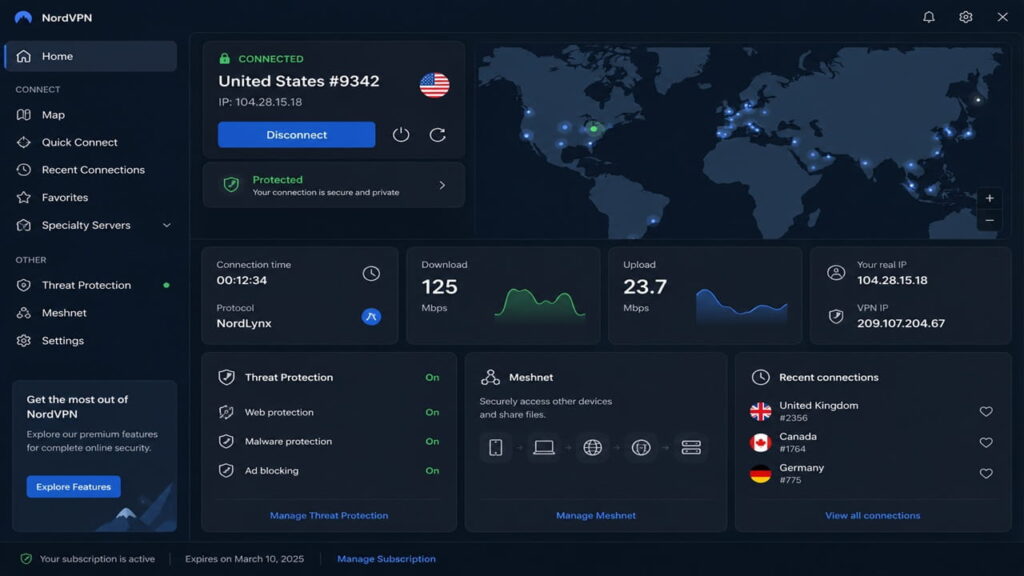
This is the category where independent testing is most consistent: NordVPN comes out faster across the board, particularly on long-distance server connections. Multiple testing outlets found NordVPN’s NordLynx protocol delivered more stable download and upload speeds, while PureVPN’s results varied more noticeably depending on which server you connected to — even between nearby servers in the same region.
If you’re using a VPN mainly to securely manage a website or server remotely — logging into your hosting dashboard, SSH-ing into a VPS, or managing client sites while traveling — that speed consistency matters more than a quick speed-test number. It’s the same reason we recommend dedicated resources in our best VPS hosting guide: consistency under real conditions beats a flashy benchmark.
🔐 Security and Privacy: NordVPN’s Audit Trail Matters
Both providers use AES-256 encryption and offer a kill switch, split tunneling, and obfuscation. Where they diverge is trust verification. NordVPN’s no-logs policy has been independently audited by PricewaterhouseCoopers, and it’s headquartered in Panama — a jurisdiction with no data retention laws. PureVPN’s privacy claims are less independently verified, and it’s worth noting PureVPN has a documented history of sharing user data with authorities in a past incident, something the company has worked to rebuild trust around since.
For most casual browsing, both will keep your connection encrypted just fine. But if privacy is genuinely a top priority for you — not just a nice-to-have — NordVPN’s audit history gives it a meaningful trust advantage.
💰 Price: PureVPN Wins on Paper
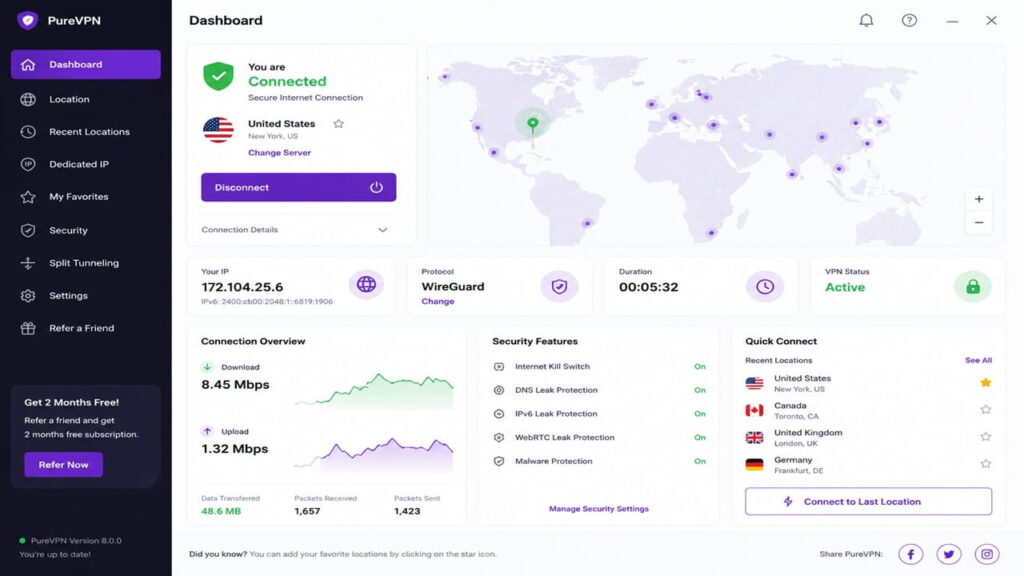
If your decision comes down purely to the lowest number on the pricing page, PureVPN wins. Its long-term plans consistently undercut NordVPN, and its 31-day money-back guarantee is a day longer than NordVPN’s 30. That said, several reviewers note that getting an actual refund from PureVPN hasn’t always been smooth in practice — worth keeping in mind if the guarantee is a deciding factor for you.
Extra Features Worth Knowing
NordVPN includes: Double VPN, Onion Over VPN, Meshnet for secure remote access, a malware/ad blocker, and dedicated IP options — useful if you’re managing infrastructure remotely or want an extra layer between you and your hosting dashboard.
PureVPN includes: Port forwarding (which NordVPN lacks), dedicated IPs, and split tunneling — genuinely useful if you’re self-hosting anything and need consistent inbound access through your VPN connection.
If you’re running your own server or VPS and want a VPN that plays well with self-managed infrastructure, it’s worth reading that alongside our VPS hosting comparison — the right combination of host and VPN matters more than either choice in isolation.
Frequently Asked Questions
Is NordVPN worth the higher price over PureVPN?
For most users prioritizing speed, streaming reliability, and verified privacy, yes. If your budget is the deciding factor and your use case is light browsing, PureVPN’s lower price is a reasonable trade-off.
Which VPN is better for streaming?
NordVPN, consistently. It unblocks more streaming platforms reliably across regions, while PureVPN’s performance varies more by server.
Which VPN has better privacy?
NordVPN, due to its independently audited no-logs policy and Panama jurisdiction. PureVPN’s privacy claims are less independently verified.
Can I use either VPN to securely manage my website or server?
Yes, both work for this. NordVPN’s Meshnet feature is particularly useful for secure remote access to infrastructure, while PureVPN’s port forwarding can help with certain self-hosted setups.
🏁 Bottom Line
NordVPN vs PureVPN isn’t a close call for most use cases — NordVPN wins on speed, security, and overall consistency, and the price difference is smaller than it first appears once you factor in actual day-to-day performance. PureVPN remains a reasonable budget pick if cost is your only concern and your usage is light. For anyone managing a website, server, or business-critical accounts remotely, the extra few dollars for NordVPN is easy to justify.